HackerHeap is back: building with AI agents in 2026
// TL;DR
HackerHeap is back, focused on the only question that matters in 2026: how do working developers actually build with AI agents? We cover Claude Code, Cursor, Windsurf, Codex, GitHub Copilot, Gemini, Aider, Cline, and Model Context Protocol (MCP) — through working code, honest comparisons, and weekly builds. No hype. No vendor lock-in. Just an engineer showing the build.
This is the first post on the new HackerHeap. It’s the welcome-back, the positioning, and the 12-week plan — all in one. If you bookmarked the site for the LeetCode and Java content, that archive isn’t going anywhere. New territory starts now.
Why now, and why this
HackerHeap went quiet for a while. The honest reason: developer education in the late 2010s was crowded with the same content. Every algorithm was already explained on five other channels. Producing the same thing as everyone else didn’t feel like it was adding much.
The reason to come back: the job changed. In 2026, the actually interesting question isn’t “what’s the optimal solution to LeetCode 200.” It’s “how do working engineers ship real software when half their day is spent prompting AI agents?” — and most existing content on that topic is one of two things: hype-driven listicles (“5 cool AI tools that will change your life!”) or vendor-aligned tutorials that pretend their preferred tool is the only one. Neither helps a working engineer.
That gap is the new HackerHeap. Working engineer voice, multi-platform, ships a runnable repo every week, no hype, no vendor allegiance. If you can read code and you’re tired of “AI is revolutionary” posts, this should be useful.
The 2026 AI-dev landscape in 90 seconds
Quick orientation, because the space moves fast and assuming familiarity is a tax on new readers. There are roughly four shapes of AI coding agent in 2026, and a handful of dominant tools in each shape:
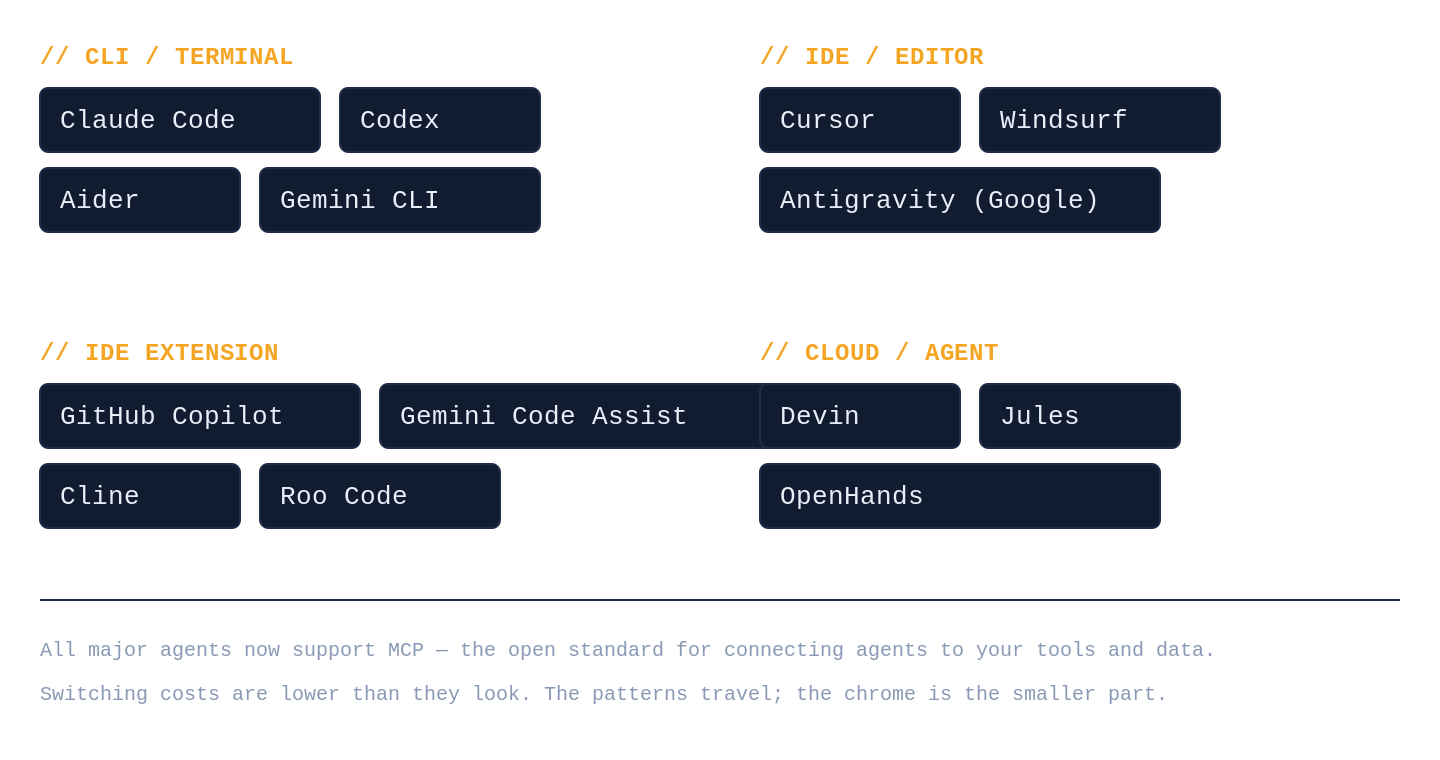
The honest take: no single tool wins. The right setup for most working developers in 2026 is two tools — one IDE-based (Cursor or Windsurf) for everyday flow, one CLI/agent-based (Claude Code, Codex, or Aider) for long autonomous work. Switching costs are low. Tool loyalty is a tax.
HackerHeap covers all of this. Not as a “best of” listicle, but as practical builds — here’s an MCP server, here’s how it plugs into four agents, here’s the gotcha I hit, here’s the working code.
The pipeline behind the publishing
Sustainable content is a system, not a sprint. The pipeline behind HackerHeap:
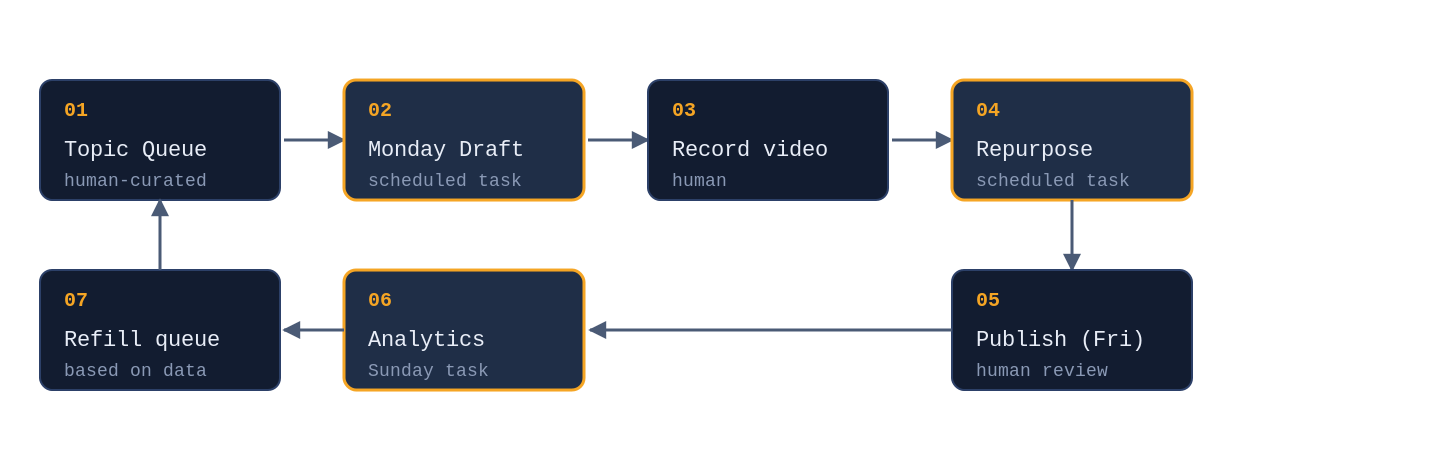
Roughly 70% of the production work is system-driven — the parts that need taste and judgment (final editing, replying to comments, choosing what’s worth shipping) get full attention. The parts that are mechanical (drafting, repurposing, analytics summarization) get delegated to scheduled tasks. The post you’re reading was generated by the pipeline as the first proof-of-concept.
The stack — multi-platform on principle and practice
For transparency, here’s the actual AI stack right now:
- Claude Code (Max plan). The CLI agent doing most of the long autonomous work — the WordPress theme, the scheduled tasks, the topic queue, this very post.
- Cursor. Open in parallel for IDE-flow work — quick edits, exploring repos, single-file changes. Different ergonomics, different mental modes.
- Codex. Tested on overnight refactor tasks. Sandboxed cloud execution is genuinely interesting; still evaluating.
- Gemini CLI. Used as a second opinion when Claude or Cursor is stuck — different reasoning paths, sometimes unblocks immediately.
- Model Context Protocol (MCP) servers. Building these is the focus of the next month. A 30-line MCP server you write today works in Claude Code, Cursor, Windsurf, and any other MCP-compatible agent — build once, use everywhere.
Multiple agents in active use, on purpose. Some weeks one is dramatically better than another. Some weeks they’re interchangeable. The point of HackerHeap is to be honest about that variance, not to pretend any single tool is the right answer.
The 12-week plan
The topic queue is roughly mapped out for the next 12 weeks. Three thematic months, ending in cornerstone articles:
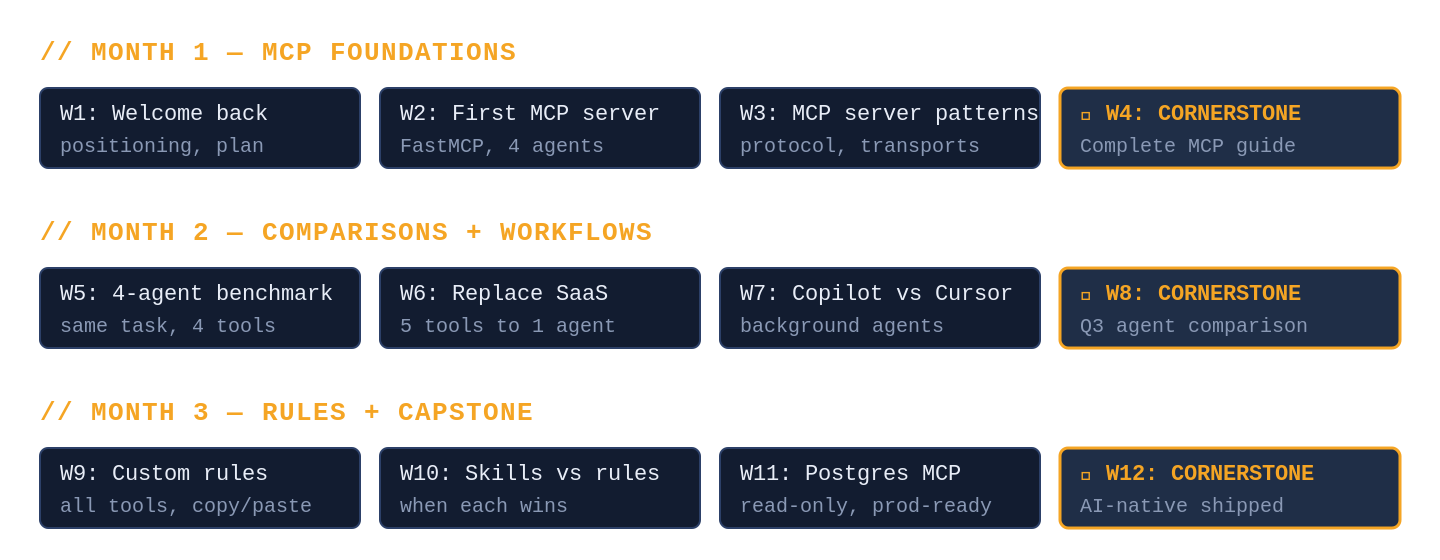
- Month 1 — MCP foundations. The most underserved area in 2026 AI dev content. Build a working MCP server, dig into the protocol, then ship a comprehensive cornerstone guide.
- Month 2 — Honest comparisons + AI workflows. Same task, four agents — real benchmarks. Replacing SaaS sprawl with one agent + a few MCP servers. Quarterly cornerstone: Honest AI Coding Agents Comparison — Q3 2026, refreshed every quarter.
- Month 3 — Custom rules + capstone. Cross-tool custom rules (CLAUDE.md, .cursorrules, GEMINI.md, .github/copilot-instructions.md). Skills vs rules — when each wins. Capstone: AI-Native Engineering: From Side Project to Shipped, a real product end-to-end.
Weekly publishing on the site, monthly cornerstones, plus the Friday Build newsletter every Friday. The archive of old LeetCode walkthroughs gets refreshed in batch — each post gets an “AI assistant (2026)” addendum that works whether you’re using Claude, ChatGPT, Cursor’s chat, Gemini, or anything else. Different toolkit, same patterns.
What I’d ask of you
If you’re new here: subscribe to the Friday Build newsletter. It’s the only thing I actually own — an email list belongs to the writer, not a platform — and it’s where you’ll see what’s shipping each week.
If you have specific things you want covered — particular MCP integrations, particular agent comparisons, particular workflows you’re stuck on — drop a comment on this post or reply to the newsletter once you’re on it. The topic queue isn’t fixed; the candidates section has 18 backlog ideas and audience requests get priority.
If you’re a working engineer with strong opinions about which agent is best, those opinions are welcome. The comparison content gets sharper when people who genuinely use a tool every day push back on the framing.
And if you’re here from the old LeetCode archive — those posts aren’t going anywhere. They’re getting refreshed for the AI era so the same problems are useful in 2026 as they were in 2020.
Welcome.
The first build ships next Friday. See you then.
Frequently asked questions
What is HackerHeap?
HackerHeap is a multi-platform resource for working developers building with AI coding agents. It covers Claude Code, Cursor, Windsurf, OpenAI Codex, GitHub Copilot, Gemini Code Assist, Aider, and Cline through working code, honest comparisons, and weekly builds.
Is HackerHeap focused on Claude or covers all AI coding agents?
All major AI coding agents. Claude Code is one of many tools we cover. Every post explicitly references multiple agents, and benchmarks are run across at least 3-4 tools when comparing.
What is MCP and why does it matter?
Model Context Protocol (MCP) is the open standard for connecting AI agents to external tools and data. Originally launched by Anthropic, MCP is now natively supported by Cursor, Windsurf, Cline, Gemini CLI, ChatGPT Desktop, and others. A single MCP server you build works across every supported agent.
How often does HackerHeap publish?
Weekly posts on the site, plus a monthly cornerstone article and the Friday Build newsletter every Friday morning US Eastern.
Who is HackerHeap for?
Working software developers who can read code and want practical, multi-platform AI coding workflows — not hype-driven listicles or vendor-aligned tutorials.
Is the content free?
Yes. The blog and Friday Build newsletter are free. Small-batch courses on Gumroad are planned for later in 2026.
Building with AI agents? Friday Build sends one ship-worthy build a week — Claude, Cursor, Windsurf, Codex, MCP, the lot. Subscribe →